
Insect Control
Spiders are feared by many people, and on occasion, that phobia can be justified. If you live in a region where you can encounter the wrong spider—such as a Black widow or a Brown Recluse—a painful bite or visit to the hospital is a distinct possibility.
In the vast majority of cases, though, a spider is not only a harmless creature but usually helpful. Before killing a spider in the garage, it might be worth looking at its web and counting the number of trapped houseflies found there. Most spiders spend their lives trapping and eating insects, and every bug consumed is one you won't have to swat or spray. Spiders are especially beloved by many gardeners since they are carnivores that feast on many insects harmful to garden plants.


Still, a cobweb dangling in your face or a spider crawling up through the bathtub drain is nobody's idea of fun, so it's understandable if you want to get rid of Spiders when they appear inside the home.
Spider Biology
Although often considered insects, spiders are actually arachnids, with eight legs rather than the six found in insect species, and two main body parts vs. the three parts common to all insects. And virtually all spiders are carnivores, with fangs to kill prey.
The lifecycle of a spider is quite different from that of an insect. A female spider can lay up to 3,000 eggs, and the embryo inside the egg undergoes all larval phases while inside the egg sac, emerging as a fully developed but tiny spider.
Most insects habitually clean their mouthparts with their legs and feet, which means that spray pesticides are easily transferred to the insect's mouth, where it is ingested. Spiders, on the other hand have long legs that keep their bodies well above the surface, and any mouth contact is performed with specialized oedipal appendages that never touch the ground, so there's little chance of absorbing pesticide from surface contact.
Some spiders spin webs to help them trap flying insects, while other spiders are active hunters that jump or run to catch insects. Spiders with short legs are generally jumpers that leap for their prey, while the long-legged species, such as wolf spiders, daddy-long-legs, and brown recluse spiders, are runners that chase down prey. In other words, just because you have no cobwebs doesn't mean your home is free of spiders.
As the spiderling matures, it will eat almost any organic material, but quite soon it will develop the ability to catch its own live prey. The spiderling will molt several times as it grows, and its old exoskeletons can often be seen in spider webs. After five to 10 molts, generally achieved after several months, the spider is mature and ready to reproduce.
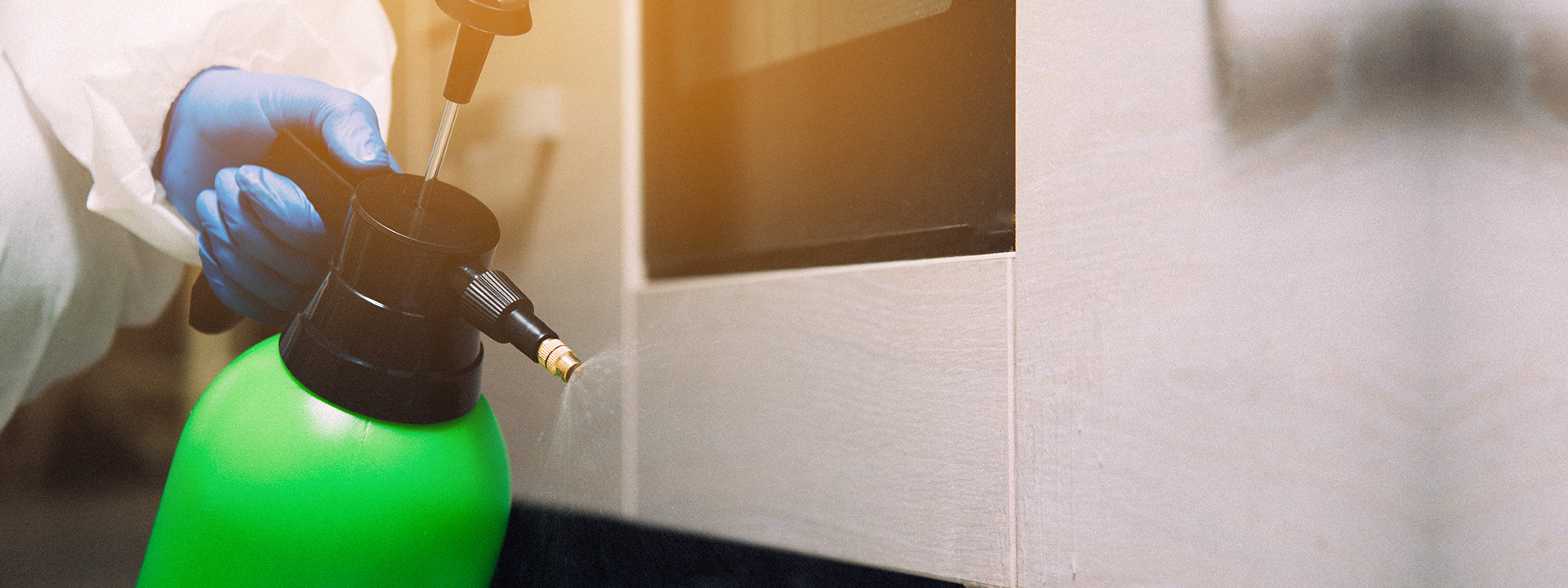
There may, however, be limited effectiveness to using a residual insecticide in the cracks and crevices that spiders pass through. As they move through tight cracks, spiders may rub against the surfaces and pick up pesticides on their heads and mouthparts.
Many spiders also spend most of their time in delicate lacy webs, not walking across surfaces where they could readily pick up pesticides. Short of a direct spray into the spider's face with a contact pesticide will be more effective.
There are a variety of organic and non toxic products that will help in your battle against spiders.
Service
This service can be applied during working hours without any disturbance.
Eco-friendly
Eco-friendly, odorless & World Health Organization approved chemical used for Cockroaches and Ants Control.
Home During
You don’t need to empty the cabinets and drawers and No need to leave the home during or after treatment.
100% effective
This treatment is safe, quick, long lasting, 100% effective and no side effects on senior citizen, pregnant women, child and pets.


